What Cars Get the Best Gas Mileage? Um, Yours.

4 Quick Tips to Boost Your MPGs

Ah, those were the days.

I remember a time not too long ago when gas was less than one dollar per gallon for premium. Okay sure, it was two decades ago, but who’s counting…
Once upon a time… (image courtesy of Pexels)

Today’s average price (today as in while I am writing this article) in Maryland is $3.63 for Regular and $4.46 for Premium. Location has a lot to do with what you pay at the pump. For instance, I was at a prime shopping area when my gas light came on (shame on me).

Chump at the pump.

I drove to the nearest gas station and selected my fuel grade. I put the nozzle in and started pumping. I could feel my body cringe and get smaller and smaller as the dollars on the display rose exponentially while the gallons just trickled. I was paying over $5.00 per gallon. I couldn’t do it. I couldn’t take one more tick from the pump. I had enough to get home. I stopped pumping, returned the nozzle, backed away from the pump, and back into my truck. I. Felt. Robbed.

“Give us all of your gas money!” (image courtesy of Canva)

Tis the season already.

News stations like CBS News and travel advisories like AAA Newsroom predict over 55 million people will travel for Thanksgiving. That is a lot of people going a lot of miles. Granted some may fly or go by train, but most will drive. AAA Newsroom states that these holiday travelers are going 50 miles or more from home. I wanted to see what advice I could give to help you enjoy the turkey on your plate rather than feel like a turkey at the pump.

The Mom-Tank.

Business Insider looked at the most fuel-efficient and least fuel-efficient cars sold in the United States and found that our cars get around 25 miles per gallon on average. How does your car compare? My truck, whom I lovingly call the Mom-Tank, does not disappoint me.

Funny Faces in the Mom Tank

She has a rather large 6.2L engine. Before we get too judgy, it has what is called Active Fuel Management. This engine is designed to operate like a 4-cylinder engine until I need the power of all 8 cylinders. I have a feature in the Driver Information Center that lets me know if I am using some or all the ROAR that she has and can adjust my driving style accordingly. I also have a display that lets me know my current fuel efficiency. As a bonus, there is a mode that lets me know my “best score.” I can set it for 25, 50, or 100 miles. I’m a bit competitive so I like to beat my own high score. Here is what I have discovered from watching these data points.


Tip #1 Watch your step.

More precisely, your foot pressure on the accelerator or gas pedal. It may seem trivial, but how you apply your foot to the gas pedal makes a bit of difference in fuel economy. Have you ever sat beside someone who fidgets? Are you a fidgeter? Your foot just tap-tap-taps away? Consider keeping steady, even pressure on the pedal. The fluttering of the gas pedal changes the signal sent from the Throttle Position Sensor to the PCM. The computer compensates for the fluctuation and load change.

Tip #2 Cruise with me.

Consider using cruise control. Your owner’s manual will tell you how to use your car’s system properly. In simple terms, you have a way to turn it on and off, a button to “Set” your speed, a button to “Accelerate,” and a button to “Coast.” In the Mom-Tank, once I set the cruise control, my speed increases by one mile per hour each time I click the plus symbol. Each time I click the minus symbol, my speed decreases by one mile per hour. I have electronically told the computer how fast I would like to travel and it sets the fuel/air mixture and throttle accordingly.

Tip #3 Coast for the most.

I am a commuter. Rush hour and I are besties. What I don’t do (I’m shaking my head as I write) is race to a red light. For me and the Mom-Tank, it is “nice and easy” for the win. To coast, I take my foot off the gas pedal and let my truck move on its own power. I am not picking up miles and miles to the gallon with this tip. Remember though, I am competitive, and I like to beat my “best score.” Watching that average MPG (miles per gallon) go up by a few tenths during each 25-minute trip is exciting. With a 26-gallon fuel tank—that is money.
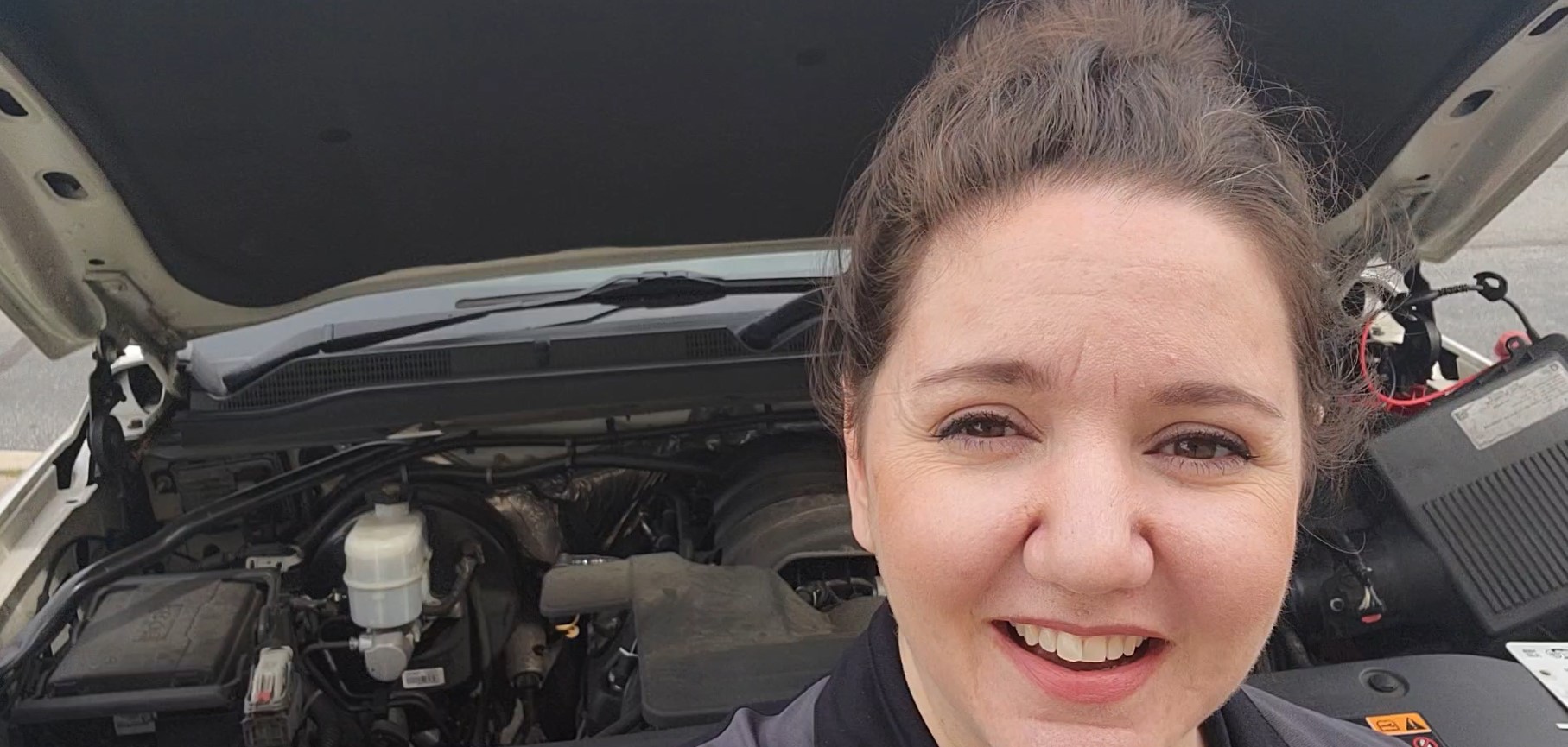
Genette talks about Car Maintenance

Tip #4 Maintenance is the key.

Your owner’s manual is full of great information. One of the biggest tips you will find there is your maintenance plan. Routinely changing parts and fluids not only gives you more life and miles with your car, but it also makes it run as efficiently as possible. The first thing that comes to mind when talking about fuel economy is spark plugs. A worn spark plug just doesn’t get the job done. Did you also know everything else plays a role in your fuel economy? The cooling system affects the engine operating temperature. Keeping it in the “Goldilocks Zone” where the engine temperature is just right is crucial for engine efficiency. Your alignment is another factor; just like tap-tap-tapping the gas pedal, compensating for a misaligned vehicle makes the car work harder than it needs to. How about the tiny and commonly overlooked PCV valve? This part can typically fit in the palm of your hand and is relatively inexpensive. When it fails, you can experience rough idle, spitting, and sputtering. Oh, and poor fuel economy.

Can I get this to go?

Here’s the thing. We can dive deep into this rabbit hole. There are tons of things I can share to help pick up a tenth or two here and there. Unless you have significant engine wear, you can get great fuel economy out of your car. Start with figuring out what your car should get based on the manufacturer’s specifications. We can compare that to what you are currently getting per gallon and see how much room for improvement you may have. Once we know that, we can create a plan to make your car get the best miles per gallon.

Who’s the turkey now? Me. It’s still me.

Genette Talks Turkey at the A. Anthony’s Annual Thanksgiving Food Drive

I Am Trying To Teach You About Your Extended Warranty.

Genette’s 5 Tips for Extended Warranty Plans

Your phone rings. It is an unknown number. You stare at the screen and maybe you debate whether to answer. It didn’t say “SCAM LIKELY,” so you press the green icon and say “Hello?”

“We’ve been trying to reach you about your car’s warranty!”

Sigh, disconnect…

The fact is, there are tons of programs out there and they are NOT created equally. When new clients call, they will often ask if we work with their extended warranty company. I also get asked what company I would recommend when my existing clients are considering coverage. Let’s explore what this coverage actually is, what you the consumer get, and if it is worth it.

We are an approved vendor for nearly all insurance companies, extended warranty companies, and fleet management companies. Over the past 30 years, I have honed my skills in this industry, learning the steps these companies require to move your repair service from start to finish.

Advertising

This is where I feel most of the public can be grossly misled. Words are thrown around like “free” and “no cost to you.” A radio ad played recently stated your car would be towed at no cost to you, and you would have rental car coverage at no cost to you. This is a fantastic hook.

These are two of the biggest “pains” when you have a car breakdown. How are you going to get your car to the repair shop? How will you get around while your car is in the repair shop? In our area, a tow service can start at $80 to “hook up” and $3 per mile. A rental car can be ~$50 per day (including taxes and fees). These “pains” are also two expenses that do not go towards the cost of repair—you have incurred these fees and haven’t even fixed anything yet. Ouch. Of course, a plan that “covers” these expenses for you looks attractive!

Tip #1: Confirm the fringe benefit coverage.

When shopping for your plan, look at the fine print. Who pays for the tow service? Do you have to pay for it and get reimbursed? Does it cap at a specific dollar amount? If the breakdown is not covered, is the tow still covered? Is there a maximum number of tows per incident—what if you tow it to your home while you find a reputable auto repair shop?

The same applies to your rental car coverage. I have come across outdated contracts that still have rental cars at $35 per day. Some other questions you may want to ask are when does rental coverage start—does it start at vehicle drop off or when repairs are approved? Is there a maximum allowance? Some contracts only allow rental coverage when the labor guide time will be more than a certain number of hours. Your car could be at the shop for several days waiting for approval, but if the labor guide says the repair takes four hours, that could mean no rental car coverage.

These answers need to be in writing in your contract. Since the salesperson is not the agent who authorizes repairs or claims, anything they say to you really doesn’t matter.

The Whole Package

Affordable and easy. That is the idea behind many of these programs. The salesperson wants to help find the package that fits your budget and your needs. They may be called different things like Bronze, Silver, Gold, or Platinum. You may hear Basic, Standard, Comprehensive, Premium, and Ultimate.

One thing I want you to keep in mind is that the salesperson is usually NOT a repair expert. They may not know your car, your systems, and what you need.

TIP #2: What kind of coverage do you really need?

The level of coverage you purchase depends on what you are looking for and what your car is equipped with. Most basic plans are usually “drivetrain” only. What does that mean? Well, that means the engine, transmission, and differentials would be covered. As it is basic, it is just that. Basic. The guts of those parts are covered, meaning an internal failure would have to occur. I want to pause here. When was the last time you recall having an internal failure of a major component? Now, is this the type of coverage you need? In most cases, the answer is no.

Modern cars have more electrical parts like modules and sensors. Consider the difference in cost between a basic plan and something more robust that covers electronics and all systems. Look for something that will cover the exterior parts of your major components too. Something else to consider would be programming your computer-related parts. When modules and sensors are replaced, programming may be required. A good plan will include parts and services along with the necessary repair.

Here is an example: A Mini Cooper overheated. The client had an extended warranty policy. The cause of the overheating was covered (parts and labor). When the engine overheated, it damaged the power steering module. The power steering module replacement was also covered (parts and labor). However, module/computer programming was not covered in the client’s policy. While it was necessary to make the new module work, it was just not covered, and the client had to pay out of pocket on top of her deductible.  

The Process

Different extended warranty companies have different processes for filing claims. Regardless of whether the auto repair shop initiates a claim online or by telephone, they all begin with the same thing. Car identification, policy or contract number, current mileage, and reason for visit. Where they begin to differ is in the authorization process. Some companies are easy; it is cut-and-dry. This part failed, this is the cost to repair, here is your authorized amount, and here is your authorization number. Others…not so much.

Tip #3: What is the claim process?

The first thing I let all my clients know is that the warranty company will expect a diagnosis to be performed. You, the client, must authorize the diagnosis and your warranty company may cover the fee if it is a covered repair. What does that mean?

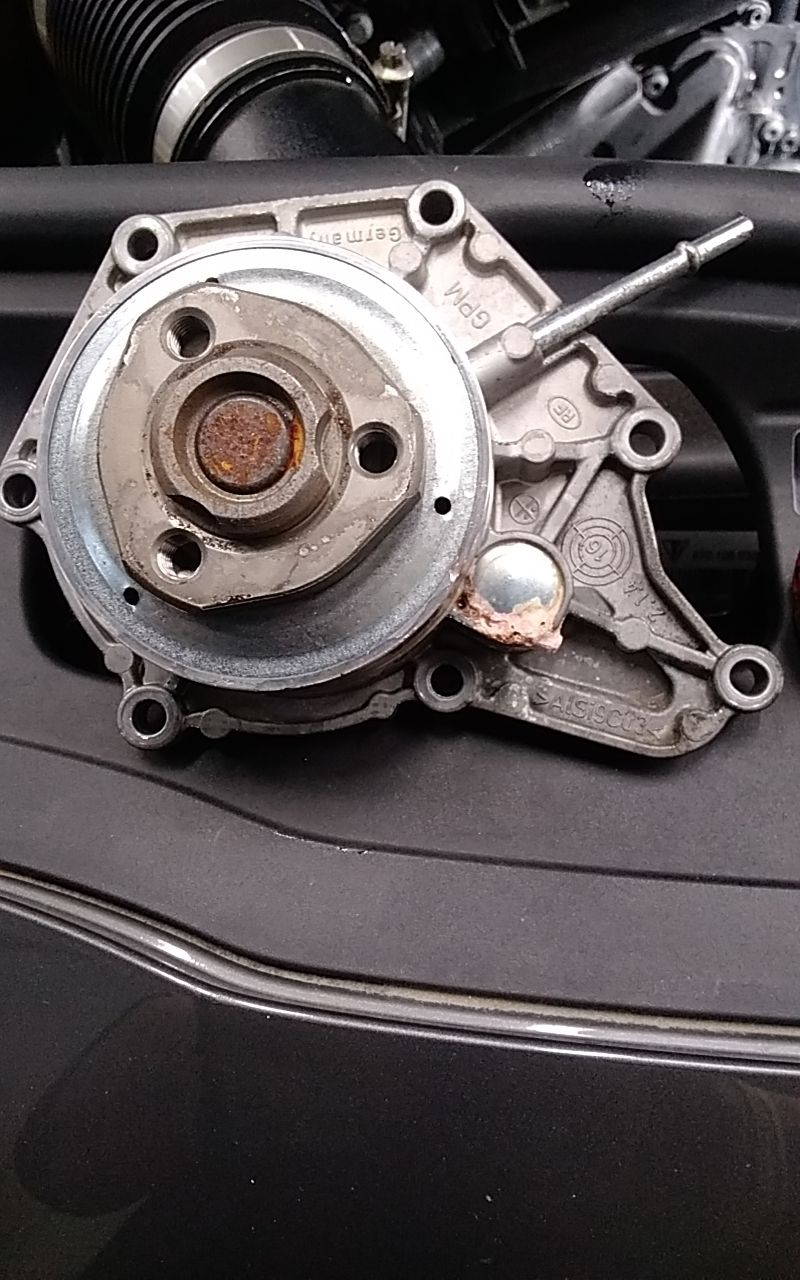
Your car is overheating. You authorize the fee for me to test and determine why it is overheating. I found out it was a water pump. I called your warranty company and told them you need a water pump. I give them the cost of the test, and the parts and labor for the water pump. It is covered. The warranty company picks up the cost of the diagnosis fee you authorized. Or the opposite:

The water pump is NOT covered. You, the client, would be responsible for the diagnosis fee. The claim is closed, and the repair is between me and you.

Tip #4 Read the fine print.

When it comes to the claims process, there is a lot of fine print. Here are a few things I thought I would share with you. Some companies allow their claims adjusters to authorize up to a certain dollar amount. Once an estimate reaches that threshold, the process stops. Cold. There is a clause in most contracts that allows the warranty company to send an adjuster out to inspect the car. This step takes up to two business days. The warranty company contracts with an outside adjuster who sets up a day to come to the repair shop and inspect the area of repair. The adjuster will take images and write a report. Then, this goes back to the warranty company for authorization. How does this affect you, my client, and me, the repair shop?

Your car has been disassembled since the original diagnosis. It has remained that way, waiting for the adjuster for two business days. It remains that way until the adjuster’s report gets back to the claims department where an agent will decide if your repair will be authorized or not. This part of the process can add up to 4 business days to just the authorization. Your car still has to be repaired.

I do my best to avoid this time delay by sending images directly to the warranty company. All our services come with Digital Vehicle Inspections. My technicians can capture images and videos, and organize them into a detailed report. We then send a link to an email or cell phone for both the client and the warranty company.

Another part of the fine print details coverage amounts. There is a misconception again in the advertising and sales pitch about coverage. The warranty company does not set the auto repair shop’s rates and fees. Just like you cannot go into a restaurant and tell them how much you are going to pay for the Surf and Turf, another business cannot dictate what a repair shop can and cannot charge. Some warranty companies will pay the repair shop’s posted labor rate. Others may pay up to a specific dollar amount. When it comes to parts, it is very similar. The company will pay up to a specific dollar amount or want to use their supplied part. How does this look in print?

When is free not really free?

I keep my clients informed every step of the way. The estimates and invoices that I submit to the warranty company look exactly like the ones I give to my client. I may submit an estimate to my client (parts, labor, tax, and fees) of $595.62. I submitted the exact same estimate to the warranty company. The warranty company states they will pay $450.00 less the client’s $100 deductible for a total of $350. The client will be responsible for $245.62.

Tip #5 Your Auto Repair Shop Is On Your Side

The fine print is very important. Whenever you can, make your contract available to your repair shop. Highlight what is and is not covered. The more I know up front, the better advocate I can be for you and your car. I can set expectations with you in the beginning and clear up any concerns you may have before we begin.

The Amazing A. Anthony’s Team!

I want to get your car repaired and back on the road as quickly as possible, whether you use an extended warranty company or not. Should you have one, I want you to get the benefits from your policy. My ultimate goal is to take care of you and your car. Your car is one of your biggest investments. My team and I can be one of the partners you choose to protect it. We are here for you!

Training. It’s What We Do.

There are a lot of different types of people in the world, from those who make things happen, those who watch things happen, and those who wondered “what just happened?” I like to think of myself as someone who makes things happen whether that is in work or in life.  One of the things my journey in life has taught me is that this world moves at an unforgiving pace sometimes. While my core value is family—being in the moment with my loved ones and making a meaningful life, I also have to continually maintain, train and grow to keep up with the ever changing needs and demands that I will face every day. Not only do I practice that philosophy personally, I share it with my team too.  My goodness, these guys are awesome!

                Recently, I sent my Shop Foreman to leadership training. To build and lead a successful team, there are key skills every leader should learn and practice. Today’s workforce has different needs than when my foreman and I first joined the workforce xxx years ago and we have to be able to understand what that looks like—“Seek first to understand, then to be understood.” (Stephen Covey). I knew that in order to help him become more successful, I had to give him access to as many tools as I could for him to accomplish his job.  After two full days of intense training, instruction, and peer-to-peer discussion he came back pumped! I had no doubt in my mind that would be the result. However, what surprised me was that he also returned with a reading list—books he wanted to read independently that his instructor recommended which also focused on improving leadership and interpersonal skills. Mind blown.

My latest conquest, “Thrive by Design” by Don Rheem

                Considering I am a leader, this is a habit that I had already created for myself. I never thought to ask my team to join me. I ask them to go to training for technical knowledge (I will get to that hot topic in just a second), but a book? A non-automotive based book? Huh. Since TRAINING IS WHAT WE DO, I offered to join him in his reading list and provided chapter take-away work sheets so we could have active discussions and we invited the rest of the team to voluntarily join. We have 3 out of 5 joining us for round one. I think we have just launched our first ever A. Anthony’s book club. Look out Oprah.

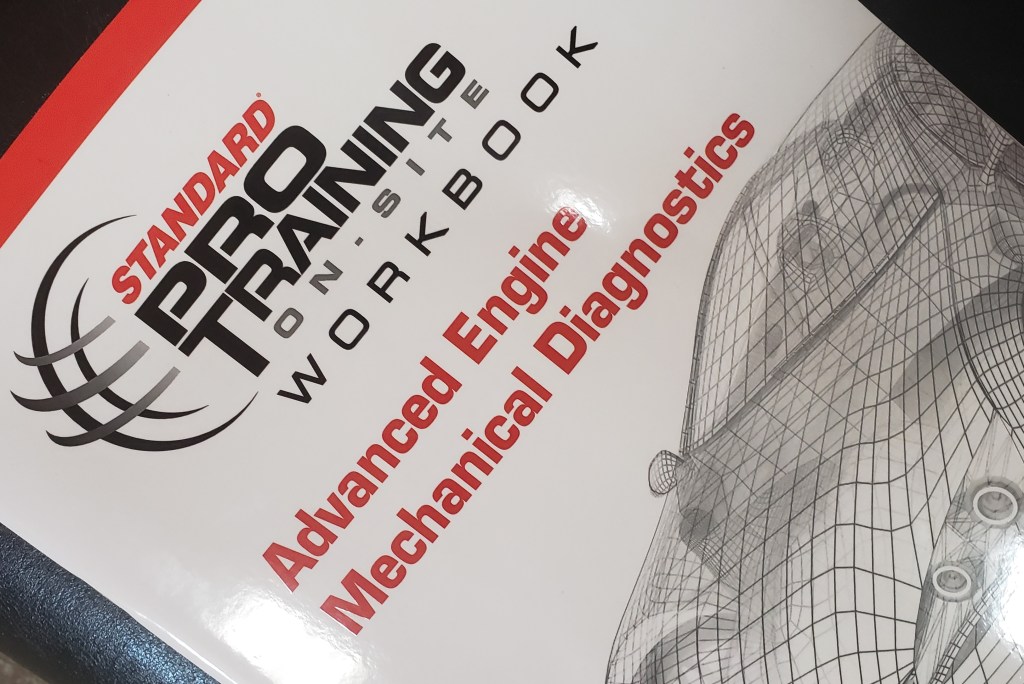
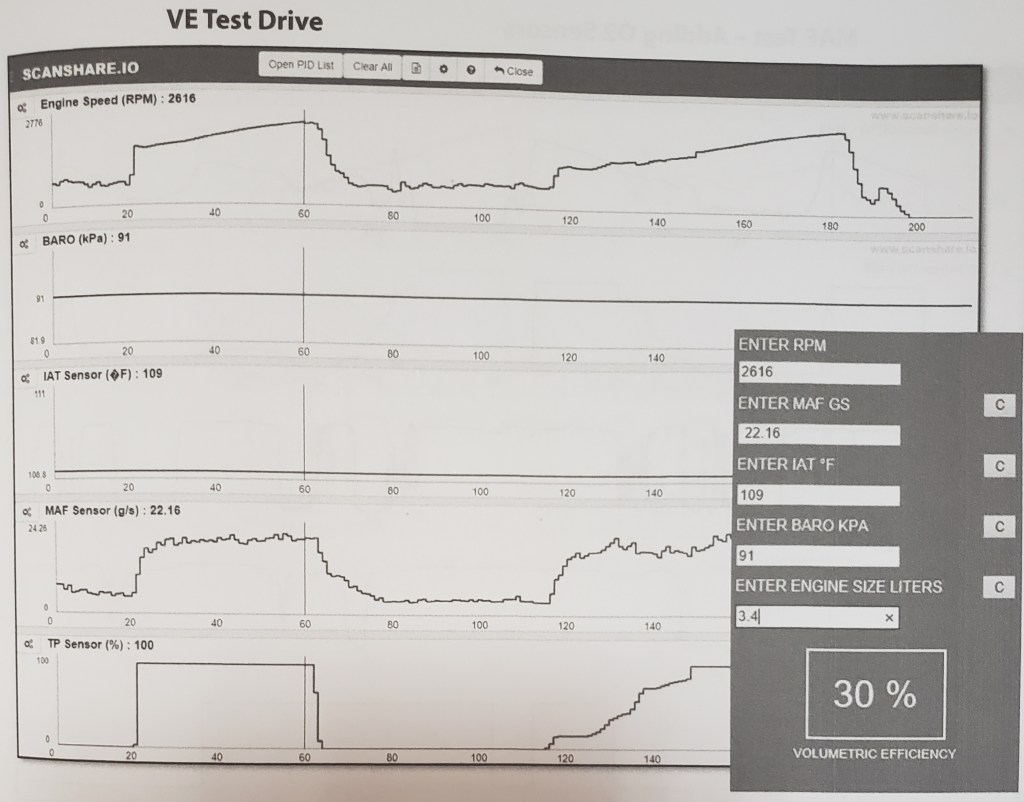
                Last night from 5:30 pm to 9:30 pm, after a full day at the shop, my entire team and I attended Advanced Engine Mechanical Diagnostics. Auto mechanics and technicians are not born with a wrench in their hands and have to learn this trade like a lawyer or a doctor would have to learn their trade (more on that topic in another blog). Engineers are always creating newer, better, faster, more efficient vehicles and technology and therefore TRAINING IS WHAT WE DO.  This class was absolutely amazing—for instance diagnosing a vehicle that has lack of power using specific scan data. We were able to compare Engine Speed, Throttle Position, Mass Air Flow grams per second, Volumetric Efficiency and Oxygen Sensor voltages to pin down the base engine fault…have to calm myself down for a second! It is amazing what our cars are equipped to do today. What is even more amazing is the technical knowledge my team and I continue to amass to stay on the cutting edge of this technology. I will not even start on the equipment and tools it takes to perform these levels of diagnosis.

                For a world that can be so domineering sometimes, it is refreshing to see it in this stage—one where my personal growth has bled into the culture at the shop. Where picking up a book, or the entire staff going to class is something we all volunteer to do. Here is to being a not just a person but a team that makes things happen and continuing to enjoy the ride!

If you are looking for a skilled and knowledgeable automotive mechanic or technician to take care of you and your family’s car, look no further. Visit my website
www.aanthonys.com
for details